
Definisi
Miopia atau rabun jauh adalah kesulitan ketika melihat jarak jauh, seperti rambu-rambu lalu lintas, namun merasa lebih mudah ketika melihat dekat. Kondisi ini merupakan kondisi yang umum terjadi dan dapat ditangani dengan kacamata cekung atau minus, lensa kontak, atau operasi refraktif. Berdasarkan kekuatan lensa yang dibutuhkan untuk mengkoreksinya, miopia dapat dibagi menjadi:
- miopia ringan, yaitu membutuhkan lensa berkekuatan hingga -3.00 D (Dioptri)
- miopia sedang, yaitu membutuhkan lensa berkekuatan antara -3.00 hingga -6.00 D
- miopia tinggi, yaitu membutuhkan lensa berkekuatan lebih dari -6.00 D
Angka kasus miopia di Indonesia pada anak usia dewasa 18,7%, pada anak usia Sekolah Dasar 32,3%.
Penyebab
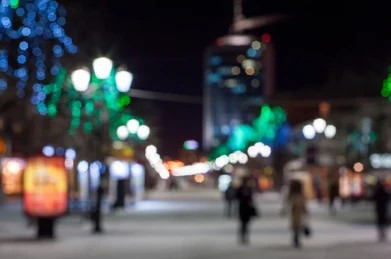
Jika bayangan benda tidak langsung jatuh tepat di retina, maka kita tidak dapat melihat bayangan dengan jelas. Pada miopia, objek dalam jarak dekat dapat terlihat jelas, namun benda yang berada dalam jarak jauh akan terlihat buram. Hal ini dapat disebabkan oleh axis bola mata yang terlalu panjang atau karena kornea yang terlalu melengkung sehingga cahaya yang masuk ke mata tidak dapat difokuskan tepat pada retina. Bayangan akan jatuh di depan retina sehingga menyebabkan pandangan buram.
Miopia dapat diturunkan. Anak dari orangtua yang mengalami miopia dapat mengalami miopia pula. Miopia pertama kali dapat diidentifikasi pada anak usia 8 hingga 12 tahun. Selama masa remaja, pertumbuhan badan dapat memperberat kondisi miopia. Di antara usia 20–40 tahun, umumnya miopia tidak lagi berubah secara signifikan. Ada juga miopia yang baru terjadi pada orang dewasa.
Umumnya, miopia akan menjadi stabil pada usia 20–30 tahun. Kondisi miopia dapat dikoreksi dengan kacamata cekung atau minus, atau pun lensa kontak. Jika pasien mengalami miopia tinggi, pasien mungkin memerlukan operasi bedah refraktif.
Faktor Risiko
Faktor risiko dari miopia, yaitu:
- Genetik, miopia diturunkan di keluarga, terutama jika kedua orang tua mengalami miopia
- Kondisi lingkungan, jarang menghabiskan waktu di luar rumah
Gejala
Gejala yang dapat dialami oleh orang yang mengalami miopia antara lain:
- Sakit kepala
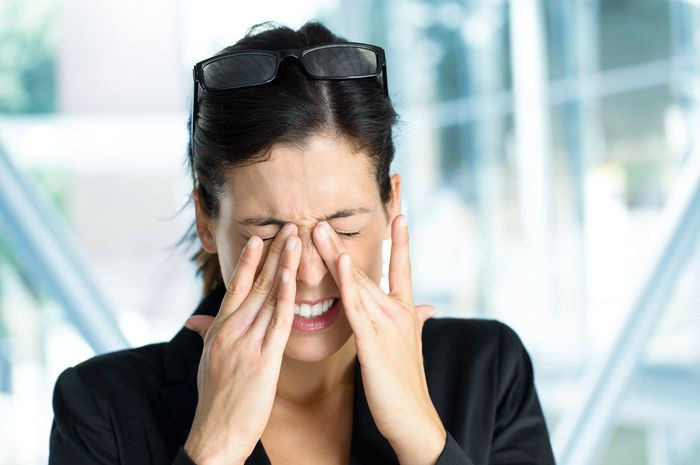
- Sering memicingkan mata atau mengernyitkan kepala
- Pegal pada mata
- Sering merasa kelelahan ketika melihat jauh
- Pada anak, umumnya sulit untuk membaca papan tulis di sekolah (umumnya usia 8–12 tahun)
- Perlu duduk di dekat papan tulis atau menonton televisi dari jarak dekat untuk dapat melihat dengan lebih jelas
- Mata terasa tegang
- Sering mengucek mata
- Mata sering berkedip
Diagnosis
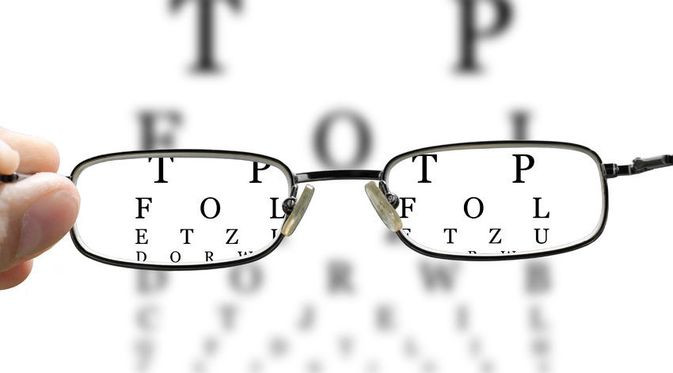
Dokter dapat mendiagnosis miopia dengan pemeriksaan tajam penglihatan, salah satunya dengan alat Snellen Chart. Umumnya, kondisi buram akan membaik dengan menggunakan lensa cekung atau minus. Pemeriksaan secara objektif dapat dilakukan dengan menggunakan streak retinoscopy.
Tata Laksana
Miopia dikoreksi dengan menggunakan koreksi kacamata, lensa kontak, atau bedah refraktif.
Kacamata
Jika orang memiliki miopia, dokter mata Anda akan memberikan kacamata dengan lensa cekung atau minus. Semakin besar kekuatan lensa minus Anda, semakin kuat lensa tersebut. Sebagai contoh, lensa -3.00 D lebih kuat dibandingkan dengan lensa -2.50 D.
Lensa Kontak
Meskipun tidak begitu disarankan, Anda dapat menggunakan lensa kontak untuk mengoreksi miopia. Untuk menggunakan lensa kontak, Anda harus menjaga kebersihan mata dan tangan, terutama saat akan memakai dan melepasnya. Penggunaan lensa kontak yang tidak bersih dapat menyebabkan infeksi pada mata.
Operasi
Prosedur bedah refraktif dapat digunakan untuk mengkoreksi miopia dengan cara memperbaiki kelengkungan kornea Anda. Terdapat beberapa jenis operasi bedah refraktif, antara lain:
- Laser-assisted in situ keratomileusis (LASIK), dengan prosedur ini, dokter mata Anda akan menggunakan laser untuk mengatur kelengkungan kornea Anda untuk mengoreksi hipermetropia. Penyembuhan dari operasi LASIK umumnya lebih cepat dan nyaman.
- Laser-assisted subepithelial keratectomy (LASEK), merupakan prosedur pembedahan yang mengoreksi pada bagian terluar dari kornea (epitel kornea).
- Photorefractive keratectomy (PRK), merupakan prosedur yang mirip dengan LASEK. Perbedaannya adalah pada PRK epitel kornea akan dibuka untuk dapat memperbaiki kelengkungan kornea. Tidak perlu khawatir, epitel kornea ini dapat kembali tumbuh secara natural untuk membentuk kornea Anda.
- Implantable Collamer Lens, menggunakan insisi mikroskopik untuk memasukkan lensa di antara lensa natural Anda dan iris. Hal ini dapat membantu membuat pandangan menjadi lebih jelas.
Perawatan di Rumah
- Selalu memeriksa kondisi mata Anda secara regular
- Melihat kondisi kesehatan Anda untuk melihat penyakit yang Anda miliki, seperti diabetes, tekanan darah tinggi
- Gunakan kacamata dengan sun protector untuk menghalangi sinar UV
- Cegah trauma mata
- Konsumsi makanan yang bergizi
- Tidak merokok
- Menggunakan lensa korektif yang tepat dan sesuai
- Menggunakan pencahayaan yang baik saat melihat atau membaca
- Kurangi pegal mata dengan selalu mengambil waktu di luar untuk beristirahat ketika bekerja
Komplikasi
- Pasien dengan miopia tinggi dapat meningkatkan risiko mengalami ablasio retina, yaitu lepasnya lapisan retina yang menempel pada bola mata bagian dalam.
- Penurunan kualitas hidup karena tidak dapat melakukan kegiatan dengan baik.
- Sakit kepala dan mata secara terus menerus.
- Mengganggu keselamatan ketika menyetir atau bekerja.
- Meningkatkan risiko mengalami penyakit mata lainnya seperti glaukoma, katarak, dan myopic maculopathy.
Pencegahan
Hal-hal berikut merupakan cara pencegahan miopia, antara lain:
- Pastikan Anda menghabiskan waktu yang cukup di luar rumah
- Batasi waktu screen time
- Sebelum masuk sekolah dasar, pastikan kesehatan mata anak Anda
- Jaga selalu kebersihan lensa kontak Anda
Kapan Harus ke Dokter?
Jika Anda merasa kesulitan untuk melihat benda jarak jauh, Anda dapat mengunjungi dokter umum terdekat untuk memeriksa mata.
Jika Anda mengalami buram mendadak dengan atau tanpa nyeri, pandangan ganda, seperti melihat cahaya, banyak bayangan hitam berterbangan segera kunjungi fasilitas kesehatan terdekat Anda.
Mau tahu informasi lainnya seputar penyakit pada mata? Yuk, baca lebih banyak artikelnya di sini!
- dr Anita Larasati Priyono
- dr Ayu Munawaroh, MKK

Sitorus RS, Sitompul R, Widyawati S, Bani AP. Buku ajar oftalmologi. 1st ed. Jakarta: Badan Penerbit FKUI; 2017.
Mayo Clinic. Nearsightedness. Available from: https://www.mayoclinic.org/diseases-conditions/nearsightedness/symptoms-causes/syc-20375556.
American Academy of Ophthalmology. Nearsightedness: What is myopia? (2021). Available from: https://www.aao.org/eye-health/diseases/myopia-nearsightedness.